
The Zeigarnik Effect and the Event Loop: Why Unfinished Tasks Keep Running in Your Mind
We all love to believe we can “shut down” after work.
Log out. Disconnect. Reset.
But the truth is different.
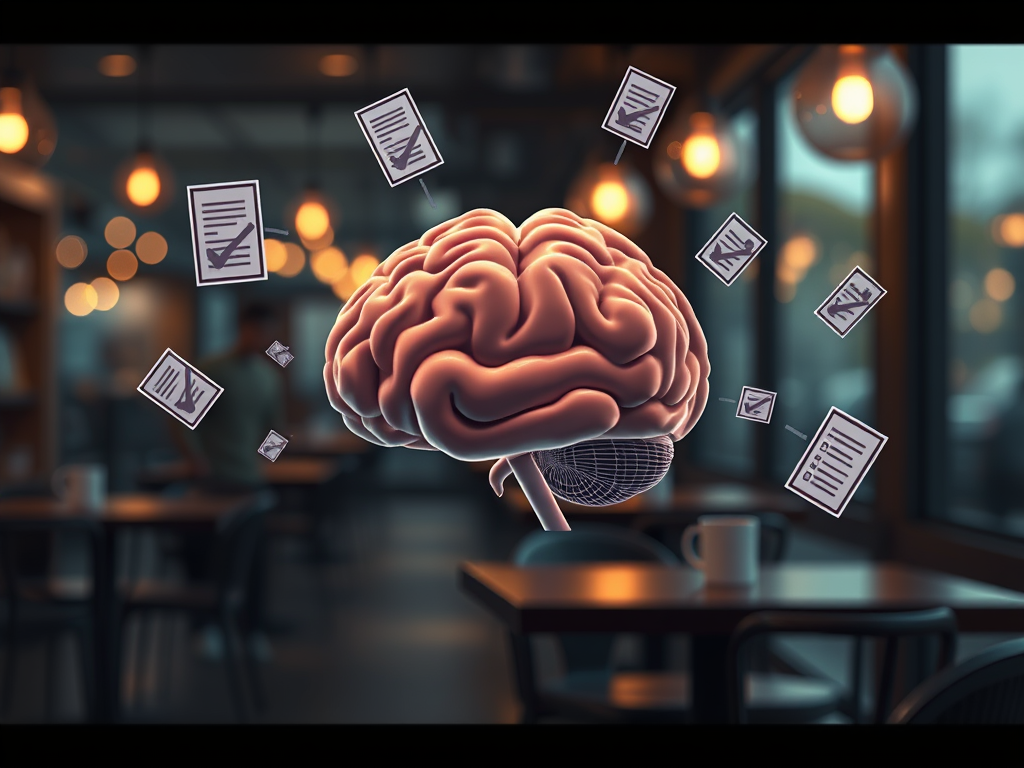
Most of our minds run exactly like an event loop — constantly checking, processing, and re-processing unfinished tasks that refuse to disappear.
If you’ve ever tried to sleep but your brain kept replaying a conversation, a bug, a meeting, or a decision…
You’ve experienced the Zeigarnik Effect.
In this post, we’ll explore why our minds behave this way — and we’ll begin with the fascinating story behind the name.
 The Story Behind the Zeigarnik Effect
The Zeigarnik Effect is named after Bluma Zeigarnik, a Soviet psychologist who made a simple but brilliant observation in the 1920s.
One day, Zeigarnik was sitting in a busy café in Vienna observing waiters.
She noticed something strange:
**Waiters remembered unpaid orders perfectly…
but once the bill was settled, they immediately forgot everything.**
They could recall table numbers, dishes, special requests — even complex orders — all without writing anything down.
But when Zeigarnik asked about an order that had already been paid?
The waiters struggled to remember it at all.
This triggered a question in her mind:
Why do we remember unfinished tasks so much more vividly than completed ones?
She later conducted controlled experiments and confirmed:
 People recall unfinished tasks nearly twice as well as completed tasks Our mind keeps incomplete tasks in an active state, waiting for closure Once a task is completed, the brain flags it as “resolved” and releases it
This became known as the Zeigarnik Effect, and it remains one of psychology’s most influential insights into motivation, stress, and memory.
⸻
Your Brain Works Like an Event Loop
Whether or not you’re from a tech background, the analogy is simple:
Your brain is a system, and unfinished thoughts behave like pending callbacks.
Here’s how:
- The loop keeps running while a microtask is pending
Your mind keeps cycling unresolved items at night.
- The queue checks for closure repeatedly
Thoughts reappear because your mind keeps polling the “callback queue.”
- Nothing gets “garbage-collected” until the reference is released
If you don’t acknowledge or resolve a thought, the mind refuses to delete it.
This is why a small task can feel heavier than the actual workload.
⸻
Why Some Thoughts Disturb Your Sleep ?
It’s not “overthinking.”
It’s not “stress management failure.”
It’s a background cognitive process waiting for resolution.
Unfinished tasks — even tiny ones — leave a psychological loop open.
Your mind keeps asking:
• Did I miss something ?
• Should I have said that ?
• What happens next ?
This persistent loop is what makes emotional rest difficult.
⸻
Closing the Loop: How to Give Your Mind an ACK
You don’t need to shut down thinking.
You just need to send your mind a simple acknowledgement.
Here are three powerful strategies:
Write it down
Your brain trusts you more when you externalize the task.
Decide the next step
Ambiguity keeps the loop alive — clarity closes it.
Close the loop consciously
Even a small note like “I’ll handle this tomorrow at 10 AM” can relax your cognitive system.
⸻
Understanding Your Internal Architecture
We often focus on how external systems work — our laptops, phones, workflows, and tools.
But what about the system running inside us?
Your mind has its own architecture:
its own queues, processes, habits, and patterns.
And sometimes, the real issue isn’t the task.
It’s the unclosed mental loop.
⸻
Have You Felt This Event-Loop Effect?
Share your story in the comments.
Your experience might help someone else understand they’re not alone in this constant mental loop
Leave a Reply